

40 Years of Covert Preparation
Iran did not improvise its strategy in 2026.
Immediately after the end of the Iran-Iraq War (1988), the Islamic Revolutionary Guard Corps (IRGC) launched a massive program to build underground bases. As early as 1984–1985, the first excavations began in the mountain ranges.
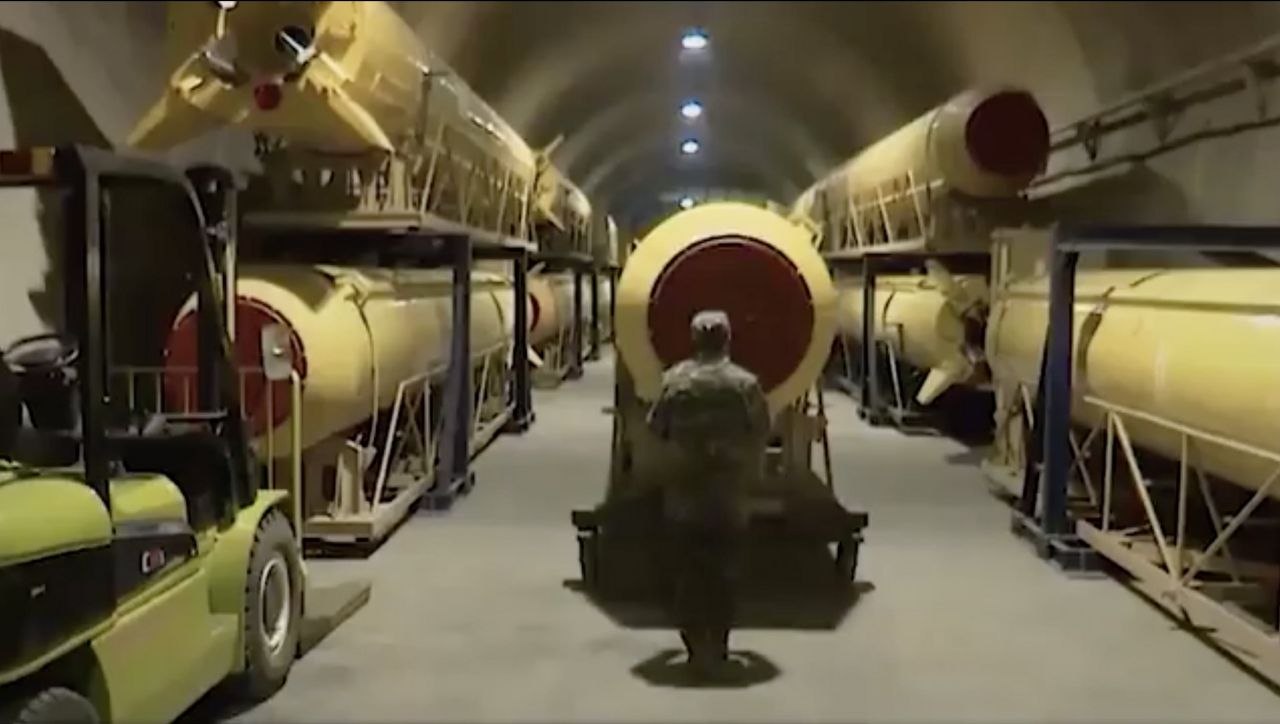
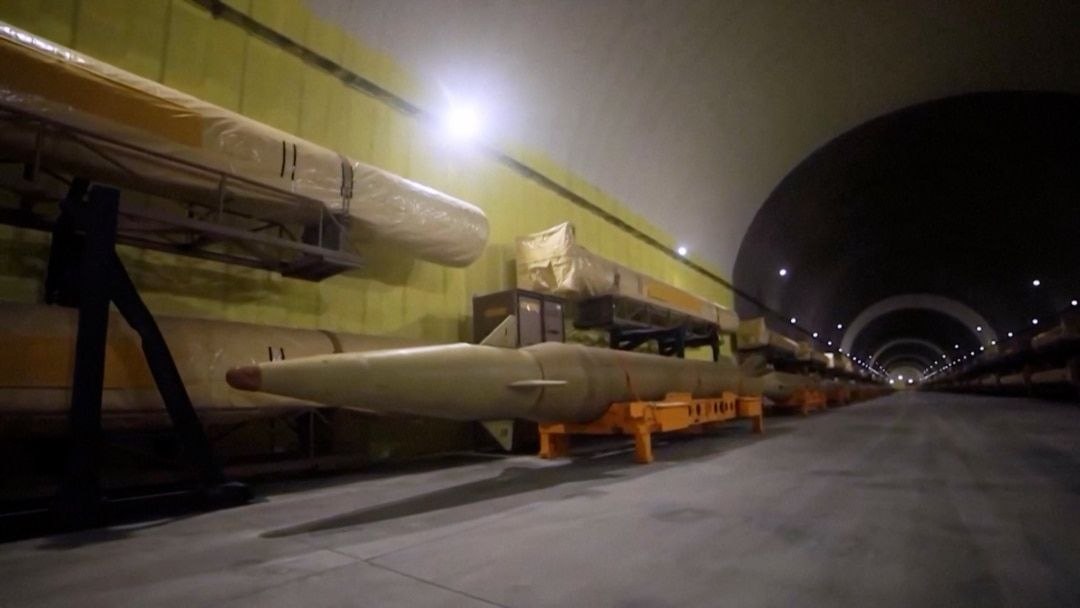
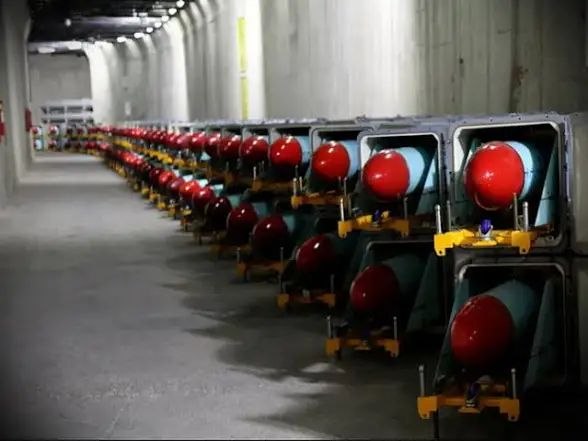
Today, missile facilities exist in each of Iran’s 31 provinces. These “Missile Cities” are dug to depths of up to 500 meters into the solid rock of the mountains (primarily the Zagros and Alborz ranges).
Inside: networks of tunnels stretching for kilometers, automated rail systems that transport missiles to launch positions, and launchers that emerge to the surface just long enough for a launch, then immediately retreat underground before any retaliation can reach them. These images, broadcast repeatedly by Iranian state media and relayed by Al Jazeera, show an infrastructure designed to survive a prolonged air campaign.
The impenetrable physical barrier
The most powerful U.S. bunker-busting bombs, such as the GBU-28 or its successors, penetrate a maximum of 60 meters of reinforced concrete (or slightly more in certain materials). Faced with 500 meters of hard rock, they fall far short—about eight times too short.
Washington is fully aware of this. On March 19, 2026, for the first time in combat, the U.S. Air Force deployed the GBU-72 Advanced 5K Penetrator (a 2,300-kg bomb in the 5,000-pound class, specially developed for fortified and hardened targets). Strikes targeted coastal sites near the Strait of Hormuz (according to CENTCOM statements and reports from The Aviationist, TWZ, etc.).
But even these next-generation weapons do not fundamentally change the situation: destroying an entrance or an exit does not paralyze the base. Each complex has dozens of secondary exits, protected by armored airlocks and decoys. The tunnels are redundant, compartmentalized, and interconnected. Hitting the entrance is like blocking one of the many doors in a giant maze.
Assessment on Day 25 of the conflict
More than 500 ballistic and cruise missiles have already been fired by Iran since the start of hostilities. After a temporary pause (likely to reassess the launches and avoid massive interceptions), the salvos have resumed with increased intensity in recent days. This confirms two crucial points:
Underground storage and launch capabilities remain largely intact.
Missile stocks have not been depleted, contrary to the initial hopes of Washington and Tel Aviv.
The Strait of Hormuz remains under strong Iranian influence: threats to oil traffic persist, maritime insurance premiums are skyrocketing, and global economic disruptions are worsening. The “Missile Cities” are holding firm. As long as they exist in their current form, no bombing campaign—even a massive one—will be able to end this war through air power alone.
Conclusion
You don’t bomb what you can’t reach.
Iran has turned its geography into a strategic weapon. The United States and its allies can inflict significant damage on surface infrastructure, radars, mobile launchers, and production sites. But the beating heart of Iran’s deterrent—those underground cities dug 500 meters beneath the mountain—remains beyond the reach of current conventional weapons.
As long as this shield exists, victory through air superiority alone seems out of reach. The war of 2026 could well be fought as much underground as in the sky.
By 'ALSAA' | March 23, 2026
In today's report from the Russian Federation of the continuation of the special military operation, the Armed Forces of Ukraine had losses of 2,125 soldiers.
The Armed Forces of the Russian Federation continue the special military operation.
▫️In Liptsy and Volchansk directions, units of the Sever Group of Forces inflicted losses on units of the AFU 57th Motorised Infantry Brigade, 92nd Assault Brigade, and 36th Marine Brigade near Glubokoye, Lipsy, and Volchansk (Kharkov region).
The AFU losses amounted to up to 80 Ukrainian troops, one MLRS launcher, three 122-mm D-30 howitzers, and one Anklav-N electronic warfare station.
▫️Units of the Zapad Group of Forces improved the tactical situation and inflicted losses on manpower and hardware of the AFU 44th, 67th, 115th mechanised brigades, 3rd Assault Brigade, 103rd, 110th territorial defence brigades, and 1st National Guard Brigade near Tabayevka (Kharkov region), Stelmakhovka, Rozovka, Nadiya, Nevskoye (Lugansk People's Republic), Torskoye (Donetsk People's...
Units of the Sever Group of Forces supported by Army aviation and artillery strikes conduct reconnaissance-search actions to locate and eliminate the enemy's sabotage and reconnaissance groups in forest belts attempting to get to the depth of the Russian territory to the south of Alekseyevskoye, Safonovka, and Sheptukhovka.
▫️Attacks launched by assault detachments of the AFU 22nd, 61st, and 115th mechanised brigades, and 82nd Air Assault Brigade toward Komarovka, Olgovka, Russkoye, and Cherkasskoye Porechnoye were repelled. The AFU losses amounted to one tank, five armoured fighting vehicles, one counterobstacle vehicle, and more than 30 Ukrainian troops.
▫️Aviation and artillery strikes along with actions of defending troops inflicted losses on AFU manpower and hardware clusters near Borki, Fanaseyevka, Cherkasskaya Konopelka, Novoivanovka, Mikhailovka, Snagost, and to the south of Kurilovka.
▫️One U.S.-made M270 MLRS launcher was destroyed by a missile strike near Bezdrik (Sumy ...
The banner of the unit was captured in battle by the Rifle Battalion of the 1st Guards Slavic Brigade.
Also, the Storm unit of the 1st Slavyanskaya captured the next object “Cheburashka”, and the 2nd battalion captured the next dacha area (in front of the Khimik microdistrict).
In addition, Russian fighters today cut the road from Lastochkino to Avdeevsky coke plant.
In accordance with the order of the Supreme Commander-in-Chief of the Armed Forces of the Russian Federation, all the Groups of Forces deployed in the special military operation zone have been strictly observing the state of ceasefire from 16:00 of 11 April to 00:00 of 12 April remaining in previously taken positions.
▫️ Despite the announced Easter ceasefire, the Ukrainian Armed Forces continued to strike by unmanned aerial vehicles and conduct artillery fire against the positions of Russian troops as well as civilian facilities in the border areas of Belgorod and Kursk regions and the Republic of Crimea.
▫️ In total, there were 6,558 ceasefire violations.
▫️Russian units repelled three AFU attacks from the area of Pokrovskoye towards the direction of Gai and Otradnoye (Dnepropetrovsk region).
▫️ Five enemy attempts to advance towards positions of Russian troops near Kondratovka, Novaya Sech (two times), Varachino in Sumy region, and Kaleniki (Donetsk People's Republic) have also been thwarted.
▫️ An adversary unmanned ...
In accordance with the order of the Supreme Commander-in-Chief of the Armed Forces of the Russian Federation, all the Groups of Forces deployed in the special military operation zone have been strictly observing the state of ceasefire since 16:00 of 11 April remaining in previously taken positions.
▫️ At night, despite the announcement of the regime of the Easter ceasefire, formations of the Armed Forces of Ukraine three times attacked positions of the Russian troops from the area of Pokrovskoye in the direction of Gay (twice) and Otradnoye in Dnepropetrovsk region. All attacks have been repelled.
▫️ In addition, four enemy attempts to advance to the positions of Russian troops near Kondratovka, Novaya Sech (twice) in Sumy region, and Kaleniki in the Donetsk People's Republic have been thwarted.
▫️ In total, 1,971 violations of the AFU ceasefire regime were recorded between 16:00 of 11 April and 8:00 of 12 April.
▫️ Ukrainian units launched two fixed-wing UAVs on the territory of Kursk and Belgorod regions. As a ...
The Armed Forces of the Russian Federation continue the special military operation.
The Sever Group of Forces improved the tactical situation. Strikes were delivered at manpower and hardware of two mechanised brigades of the AFU and a territorial defence brigade close to Miropolye, Novodmitrovka, and Khoten (Sumy region).
In Kharkov region, units of two mechanised brigades of the Armed Forces of Ukraine, a territorial defence brigade, and a national guard brigade have been hit close to Staritsa, Pokalyanoye, Volchanskiye Khutora, Veterinarnoye, Zybino, and Zemlyanka (Kharkov region).
▪️The enemy lost more than 180 troops, two armoured fighting vehicles, nine motor vehicles, and four electronic warfare stations. One ammunition and two materiel depots were eliminated.
The Zapad Group of Forces improved the situation along the front line. Strikes were delivered at formations of two mechanised brigades, an assault brigade of the Armed Forces of Ukraine, and a territorial defence brigade near Chervony Oskol, Shiykovka, ...